Action Versus Shooter: Design Mechanics, Difficulty Curves, and Player Fit
In game design, action titles and shooter genres diverge sharply in their core interaction loops. Action games typically emphasize platforming precision and timing, whereas shooters prioritize aim and reflex under pressure.
Mechanics Comparison
Action platforms demand tight control of movement variables: velocity on a running tile, momentum entering a jump, and exact vertical clearance over spikes or gaps. In Rainbow Tower the designer layers moving platforms with icy tiles, spinning lava bars, surprise snowstorms, and snowball portals that can knock you into the void. Success depends on predicting platform shifts and executing jumps at precisely calculated moments.
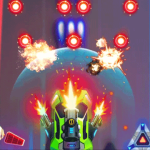
Shooters focus on aiming mechanics, weapon handling, and environmental cover usage. The core loop involves scanning for threats, selecting appropriate fire modes, managing ammunition or cooldowns, and using obstacles to mitigate damage while returning fire.
Difficulty Curve
- Action platforms often employ a steep difficulty curve because each jump is an independent binary test: either you clear the gap or you do not. Rainbow Tower adds environmental hazards that can end runs abruptly, forcing players to master both platforming and situational awareness.
- Shooters usually adopt a more forgiving learning curve. Early stages introduce basic aiming with slower targets; later levels increase fire rate, reduce cover, and add moving enemies or power-ups. This allows gradual mastery of aim while retaining some margin for error.
Player Suitability
Candy Sort Game Guide · Goalpost Shuffle Game Guide · Mahjong Tiles Match Game Guide · Commando Gun Shooting Game Guide · Beginner's Guide · High Score Tips · Free Online Game · Walkthrough Tips · Popular H5 Game · Beginner's Guide · Popular H5 Game · Want more? Keep playing · Too easy? Level up · Too easy? Level up · Want more? Keep playing
Players who thrive on precise timing and repeated failure loops tend to excel at action platforms. Rainbow Tower rewards those willing to attempt jumps repeatedly, learn from each miss, and adjust their approach floor by floor. The game's winter theme and fast pace make it appealing for competitive or speed-focused players.
Shooters attract players who enjoy strategic cover usage, target prioritization, and reflex training under pressure. They value the ability to build muscle memory over time rather than repeating a single binary test. Many shooters also feature cooperative modes where communication and role assignment become central skills.
Quick Reference
| Metric | Action / Platformer | Shooter |
|---|---|---|
| Primary skill | Timing, precision jumps | Aim, cover management |
| Fail state | Fall into void or spike | Health depletion |
| Pacing | Fast, relentless runs | Burst combat, tactical pauses |
| Learning loop | Repeat same jump many times | Gradual aim improvement |
Recommendation
If you seek a solitary challenge that tests your reflexes without relying on teammates, Rainbow Tower is the stronger fit. Its binary difficulty and environmental hazards make each attempt feel distinct yet comparable to classic platformer design.
If you prefer cooperative play where success depends on coordination rather than repeating the same motion dozens of times, a two-player shooter offers better value. Even though Rainbow Tower includes snowball portals that can knock players out of bounds, it is fundamentally designed for single-player runs; shooters naturally support head-to-head or team-based modes.
Try These Games
Jump Masters | 3D Tower Defense | 3D Sniper Shooting Game | SIDEFIRE
Ultimately, choose the genre that matches your preferred learning style: action platforms reward persistent refinement of a specific skill, while shooters provide strategic depth and room to grow with teammates. Both offer compelling experiences when approached with the right mindset.
Quick Reference
- Games in Action suffer from shallow tutorial design
- Most Action advice repeats marketing copy
- Community wikis outperform official guides for Action
- Engine constraints drive Action mechanic dominance
At a Glance
| Factor | What Most Guides Say | What Actually Matters |
|---|---|---|
| Beginner | Start slow, build up | Dive into failure for rapid learning |
| Advanced | Follow pro strategies | Reverse-engineer failure modes |
| Learning | Linear progression | Alternating challenge/rest cycles |