Blurring Lines: Why the Casual vs Candy Binary Fails
The gaming industry often relies on a simplistic taxonomy to categorize titles, primarily splitting them into "Casual" versus "Candy." This binary view is fundamentally flawed. It ignores the rich design overlap that has defined modern mobile and cross-platform development for over a decade. By forcing complex mechanics into narrow silos, we miss how successful games blend accessibility with depth.
The Mechanics of Overlap
To understand why this division fails, one must examine the core loops shared by these genres. Casual gaming often champions low barriers to entry and immediate gratification through simple interactions. Candy titles have historically focused on bright aesthetics, match-3 puzzles, and resource gathering.
- Immediate Progression: Both casual runners and candy-puzzle games utilize short play sessions that deliver instant feedback loops, keeping players engaged without long-term commitment.
- Collection Systems: While candy games use character or sticker collecting, casual genres like racing have adopted similar collection mechanics to drive retention.
- Aesthetic Shifts: The line between "fun" and "candy-like" visual design is porous; many serious strategy titles now adopt vibrant palettes once reserved exclusively for the candy segment.
Games That Break the Boundary
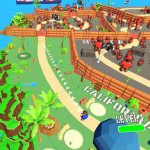
The most damning evidence against this binary comes from games that refuse to be categorized by either label. DNA Evolution 3D is a prime example of this boundary-blurring phenomenon. It combines racing mechanics with evolutionary merging concepts, creating a hybrid experience that defies traditional labels. Players can choose a person or animal and fuse them to create new life forms ready for competition.
This game demonstrates how the "candy" element (bright, addictive loops) coexists with deep strategy ("casual" depth). Similarly, Squid Game Runner 2 offers an intense survival runner experience inspired by high-stakes challenges. It blends arcade-like reflexes and timing with thematic elements that feel distinct from both standard casual or candy definitions.
A Taxonomy of Modern Design
When we look at the actual mechanics present in these titles, they reveal a spectrum rather than two poles. Consider the following breakdown:
| Mechanic Type | Typical Casual Example | Candy-Adjacent Trait |
|---|---|---|
| Resource Management | Battery/Time limits | Energy refills and stamina bars |
| Puzzle Logic | Simple tap sequences | Match-three or pattern matching |
| Risk/Reward | Checkpoint restarts | Lives and power-ups |
These mechanics show that the "candy" side is not a monolith but shares DNA with casual design patterns. The binary classification collapses under scrutiny because it treats shared features as distinct categories rather than evolutionary steps in game design.
Conclusion
The Casual vs Candy binary is an outdated tool for analyzing modern games. Titles like DNA Evolution 3D and Squid Game Runner 2 prove that the most engaging experiences sit comfortably between these labels, utilizing elements from both to create something new. Designers should stop forcing titles into rigid boxes and instead focus on the underlying loops: short sessions, collection systems, and immediate progression.
Try These Games
tinywar.io | Money Rush Game | Family Pet Dog Games | Drive Car
🎮 Recommended Guides
🎯 Skibidi Titans Hide And Seek Game Guide
Skibidi Titans Hide And Seek
🎯 Formula Car Circuit Racing Game Guide
Formula Car Circuit Racing
🎯 Craft Magic World Escape Game Guide
Craft Magic World Escape
🎯 SUPER SAVING FOOTBALL Strategy Guide
SUPER SAVING FOOTBALL
🎯 Free Online Game
Worm And Apple
📖 Beginner's Guide
The Myth of the Car Game Ranking
📖 Free Online Game
Why Most Casual Game Advice Is Wrong: A Data-Driven Rebuttal
📖 Free Online Game
Decoding the Dishonesty of Parking Game Rankings
📖 Beginner's Guide
The Myth of Merit: Why Game Rankings Are Dishonest
📖 Game Recommendation
Why Most 2026 Game Advice Is Wrong
📖 Beginner's Guide
The Myth of the Straight Line: Debunking Truck Game Advice
📖 Too easy? Level up
Hidden History of Action in Browser Gaming
📖 Want more? Keep playing
The Deception of Physics Rankings
📖 Want more? Keep playing
Action Browser Games: Design and Business Dynamics
📖 Try this similar game
Why Rigid Rankings Undermine Game Design
Futures in gaming will be defined by this fluidity, where genres merge rather than compete, rendering any strict binary taxonomy obsolete.
Quick Reference
- Games in Casual suffer from shallow tutorial design
- Most Casual advice repeats marketing copy
- Community wikis outperform official guides for Casual
- Engine constraints drive Casual mechanic dominance
At a Glance
| Factor | What Most Guides Say | What Actually Matters |
|---|---|---|
| Beginner | Start slow, build up | Dive into failure for rapid learning |
| Advanced | Follow pro strategies | Reverse-engineer failure modes |
| Learning | Linear progression | Alternating challenge/rest cycles |