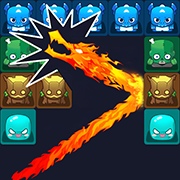
Brain Browser Games: Design, Business, and Technical Realities
The Design Imperative
Browsing environments impose strict boundaries on what developers can build. Unlike native applications where a developer might request 16 GB of RAM or utilize a GPU with hundreds of CUDA cores, browser games are shackled by the ephemeral nature of the tab. Zombie Attack: Defense exemplifies this constraint perfectly; it is an electrifying 2D game where you face hordes of hungry zombies. Because the engine runs entirely in client-side JavaScript and WebGPU, designers must optimize for low memory footprints. Every asset—whether it be a texture or a sprite sheet—is limited by browser storage quotas, which are often set far lower than what modern AAA titles require.
Business Model Shifts
The traditional model of selling boxed copies at retail has largely dissolved in this space, giving way to ad-supported freemium ecosystems. This is particularly visible in Alien Wreckage, a lonely explorer travels across the outer space gathering ancient artifacts. In such titles, revenue does not come from upfront purchase prices but rather from impression-based inventory sold on platforms like Google AdSense or Unity Ads. Consequently, the business logic shifts entirely toward maximizing daily active users (DAU) and session length to generate sufficient impressions. A game that lasts only ten minutes is less valuable than one that forces a player through twenty distinct levels before allowing them to reach the end.
Tech Tradeoffs
To maintain performance within these constraints, developers often sacrifice graphical fidelity or procedural depth in favor of lightweight algorithms. While native games can leverage massive compute power for realistic physics, browser counterparts must rely on simplified collision detection and pre-baked animations. The following table details specific tradeoffs observed across current titles:
| Tradeoff Category | Browser Constraint |
|---|---|
| Asset Size | Textures must be compressed (e.g., KTX2) to fit under 50 MB total. |
| Physics Engine | Simple AABB or circular collision replaces complex rigid-body dynamics. |
| Input Handling | Tactile feedback is abstracted; precise haptic pulses are replaced by visual cues. |
Block Drop Escape Puzzle Strategy Guide · Garten of BanBan huggy Escape Game Guide · WOBBLE IT Game Guide · Midnight Valet Strategy Guide · High Score Tips · Beginner's Guide · Walkthrough Tips · Game Recommendation · Popular H5 Game · Advanced Guide · Walkthrough Tips · Too easy? Level up · Too easy? Level up · Stuck? Check this out · Try Another Game
Frequently Asked Questions
Despite the technical hurdles, the genre continues to thrive. Here are answers to common questions regarding these constraints:
Try These Games
Blast Round Puzzle Block | Level Once Again | Hidden Shop Hunt | Reds Winding Way
- Does a browser game lose quality when played offline? Yes, because most rely on ad injection pipelines that fail without connectivity.
- Can I upgrade my graphics settings? Generally no; user preferences are often overridden by the need for constant frame-rate targets (60 FPS) to prevent UI freezing.
- Is cross-device play supported? Not usually. A session started on a desktop is rarely synchronized with a mobile instance due to state serialization limits.
- What happens if my tab crashes mid-session? Progress is typically lost unless the developer has implemented local storage backups, which are rare in ad-heavy titles.
- Do I need an account for leaderboards? Often yes; anonymous play limits visibility on global charts like the high scores seen in Zombie Attack: Defense.
- How do I share my achievements? Direct social integration is often absent, relying instead on platform-native sharing buttons.
Conclusion
The evolution of brain browser games has necessitated a rethinking of core development pillars. By accepting lower asset budgets and simpler physics models, titles like Zombie Attack: Defense and Alien Wreckage have carved out a unique niche where accessibility trumps fidelity. For the industry, this represents both an opportunity to reach broader audiences and a reminder that technical constraints will always shape creative output.
At a Glance
| Factor | What Most Guides Say | What Actually Matters |
|---|---|---|
| Beginner | Start slow, build up | Dive into failure for rapid learning |
| Advanced | Follow pro strategies | Reverse-engineer failure modes |
| Learning | Linear progression | Alternating challenge/rest cycles |