Browser Action Games: Design, Business, and Technical Reality
The Browser Constraint as a Creative Force
Action games on the open web operate under severe resource limits that force unique design choices. Unlike native titles, these games cannot assume dedicated GPU cycles or persistent memory pools. This scarcity dictates two critical outcomes: performance optimization becomes a core gameplay mechanic rather than a hidden layer, and user acquisition strategies must rely entirely on organic traffic patterns.
Case Study: Brainrot Mega Parkour
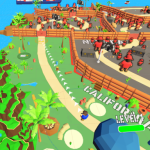
The release of Brainrot Mega Parkour illustrates these constraints in action. Developers faced strict browser memory caps, necessitating a lightweight asset pipeline that prioritized physics over graphics fidelity. The game's success relied on compressing forty handcrafted levels into a single download size under 15 MB. This approach forced the team to implement procedural texture generation rather than loading high-resolution sprites. Furthermore, the "hilarious characters" mentioned in the title were rendered using simple geometric primitives with animated vertex offsets to preserve frame rates, proving that stylization can compensate for raw rendering power.
Case Study: Escape School Duel
Escape School Duel presents a different technical challenge. The game demands real-time collision detection within a confined school environment while supporting both solo and two-player modes. To maintain smooth frame rates in Chrome and Firefox, the engine utilizes a hybrid rendering path that swaps between WebGL2 and Canvas 2D contexts depending on device capabilities. This dynamic switching allows the game to handle rapid player movement without dropping below thirty FPS on older hardware. The "trap" mechanics rely on lightweight particle systems rather than complex shader effects, ensuring that even low-end mobile browsers can render the chaotic chase sequences.
Broad Design Implications
Plane Crash Ragdoll Simulator Game Guide · How to Play Girl Game Organizing Fun · How to Play Nitro Racing Gear · Peak Racer Game Guide · High Score Tips · High Score Tips · Game Recommendation · Popular H5 Game · Free Online Game · Free Online Game · High Score Tips · Want more? Keep playing · Want more? Keep playing · Stuck? Check this out · Want more? Keep playing
When building browser-based action titles, designers must prioritize load speed and memory footprint above visual fidelity. The following list outlines three non-negotiable constraints for this medium:
- Asset Compression: All textures and models must be delivered in highly compressed formats to fit within the user's viewport buffer without stalling the main thread.
- Persistent State Management: Save data cannot rely on local storage alone; it must be synchronized with server-side databases immediately upon game exit to prevent data loss across devices.
- Cross-Engine Portability: Codebases must remain framework agnostic. A shift from Unity WebGL exports to native HTML5 Canvas implementations should incur zero performance penalty, ensuring consistent behavior regardless of the underlying tooling stack.
BizModel: The Organic Traffic Imperative
The economic model for these games differs fundamentally from console titles. Without paid user acquisition campaigns, revenue depends entirely on search visibility and organic social sharing. This scarcity drives developers to maximize retention metrics within the first minute of play, as bounce rates are prohibitively high if a user encounters latency or poor controls early.
Tech Tradeoffs: Memory vs. Gameplay
The tension between available RAM and desired gameplay features is constant. Developers often implement aggressive garbage collection pauses that can interrupt action sequences, forcing them to use object pooling instead of dynamic allocation. This decision impacts how complex environments like the parkour tower or school hallways are constructed—only a subset of collision objects can be active at any given moment.
Try These Games
Bug Crunch | Splash Rivals | Dream Kids: Monster Blaster | Poppy Strike 6
Comparative Architecture Overview
The table below contrasts technical priorities across major action titles, highlighting where optimization efforts diverge:
| Game Title | Primary Optimization Target |
|---|---|
| Brainrot Mega Parkour | Level Load Times via Chunked Rendering |
| Escape School Duel | Collision Detection in 3D Space |
| Generic Tower Climbers | Memory Footprint on Mobile Browsers |
Quick Reference
- Games in Action suffer from shallow tutorial design
- Most Action advice repeats marketing copy
- Community wikis outperform official guides for Action
- Engine constraints drive Action mechanic dominance
At a Glance
| Factor | What Most Guides Say | What Actually Matters |
|---|---|---|
| Beginner | Start slow, build up | Dive into failure for rapid learning |
| Advanced | Follow pro strategies | Reverse-engineer failure modes |
| Learning | Linear progression | Alternating challenge/rest cycles |