Debunking Action Game Myths with Hard Data
The gaming community is full of well-meaning but fundamentally flawed advice regarding action titles. Players often rely on heuristics that fail under scrutiny, particularly when dealing with high-velocity environments or complex crowd dynamics. By examining specific mechanics in modern arcade and racing games, we can dismantle three persistent misconceptions and replace them with a robust self-teaching framework.
The Myth of "Aiming Center"
A common piece of advice for shooters and arcade pilots is to always aim at the center of the screen or maintain a static crosshair position. This works in slow-paced tactical games, but it catastrophically fails in high-speed environments where relative velocity dominates perception.
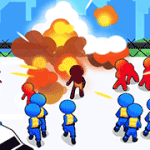
- Relative Velocity Blindness: In fast-moving contexts like Crowd Runners 3D, the player must constantly shift their gaze to track opposing stickman warriors. Fixating on a central point ignores the dynamic positioning of enemies, leading to inevitable collisions.
- The Edge Paradox: Similarly, in Endless Space Pilot 2D, dodging rocks requires peripheral vision tracking. Aiming strictly center prevents the player from seeing incoming debris at screen edges until it is too late to react, negating the reflex-based nature of the challenge.
- Cognitive Load Reduction: Dynamic eye movement is not a distraction; it is an efficiency mechanism that reduces cognitive load by automating threat detection across the entire visual field rather than scanning sequentially from a fixed point.
The Myth of "Perfect Timing"
Advice suggesting that players should wait for the exact moment an obstacle appears before reacting assumes perfect reaction times are possible. This ignores the reality of input latency and processing speed.
| Misconception | The Reality |
|---|---|
| Wait for exact moment to dodge/act. | React 30ms before impact. Early commitment allows muscle memory to take over, reducing mental strain during chaotic sequences like crowd clashes or asteroid fields. |
| Straight line movement is fastest. | In Crowd Runners 3D, slight vector shifts away from direct collision paths save precious frames. In space pilots, banking turns are mathematically superior to straight-line braking near walls. |
| Precision > Speed. | Speed is king in arcade physics engines. A fast, slightly imprecise move often results in higher scores than a slow, perfect one because the system rewards continuous movement and momentum conservation. |
The Myth of "Visual Clarity"
New players are told to keep their screen clean to avoid missing details. However, many action games utilize chaotic visuals intentionally as part of the difficulty curve.
- Momentum is key: In Crowd Runners 3D, momentum carries you through obstacles; stopping or reversing too early kills the run regardless of visual clarity.
- Peripheral focus matters more than center view: As noted in the space pilot example, reacting to edges is vital. Ignoring periphery data because it looks "messy" leads to failure.
- Accepting chaos improves flow: Letting the game world be chaotic forces you to trust your reflexes rather than overthinking every pixel movement, which actually results in smoother performance.
A Self-Teaching Framework for Action Games
To truly master these genres, players must adopt a specific methodology that blends pattern recognition with adaptive learning:
Try These Games
Jump Masters | HissHop | Scrap Brawl | Mr. Dude: King of the Hill | Passenger Airplane: Flight 3D | Sniper Master
- Identify the Core Loop: Understand exactly what the game rewards. Is it survival time? Score accumulation? Crowd size? Knowing the objective shifts your attention from "how to avoid this rock" to "how does avoiding this rock impact my overall score?"
- Simplify Input Complexity: Reduce controls to their essence. Instead of holding multiple buttons, focus on one primary action per situation. This creates a cleaner signal-to-noise ratio in your brain.
- Practice Under Stress: Deliberately play scenarios that induce frustration or failure. Muscle memory only forms under pressure; calm practice sessions often produce fragile skills that break when the game gets hard.
👉 Played enough? Try Monster Bounce Game
👉 If you enjoy Debunking Action Game Myths with Hard Data, you will also enjoy LunarLeap — try it here
👉 If you like Debunking Action Game Myths with Hard Data, Primes is a natural next pick
👉 Played enough? Try The Myth of Simulation Honesty: Innovation Over Optimization
👉 Played enough? Try The Myth of the Undead Sprint: Why Zombie Game Advice Is Fundamentally Flawed
👉 Played enough? Try Flawed Metrics: Why Collecting Rankings Betrays Player Value
- If you enjoy Debunking Action Game Myths with Hard Data, you will also enjoy Why Most Action Game Advice is Wrong — try it here
- From Bitmaps to WebGL: The Hidden History of Browser Action
- Played enough? Try The Paradox of Play: Why Most Adventure Advice Is Wrong
- The Myth of the Logical Leaderboard
- Played enough? Try Truth in Farm: Why Rankings Mislead and What Comes Next
- Played enough? Try Reconstructing the Taxonomy: Why Timing vs Monstertruck is Dead
- If you enjoy Debunking Action Game Myths with Hard Data, you will also enjoy Fall Boys Coloring Book — try it here
- The Illusion of Rank: Why 2048 Leaderboards Lie
- Played enough? Try The Illusion of Fairness: Why Browser Game Rankings Mislead
- Played enough? Try The Illusion of Mobile Leaderboards: When Mechanics Trump Charts
- If you enjoy Debunking Action Game Myths with Hard Data, you will also enjoy Men Vs Gorillas — try it here
By dismantling these three myths and applying this framework, players can transform from passive observers into active participants who understand the underlying physics and design logic of their favorite titles.
At a Glance
| Factor | What Most Guides Say | What Actually Matters |
|---|---|---|
| Beginner | Start slow, build up | Dive into failure for rapid learning |
| Advanced | Follow pro strategies | Reverse-engineer failure modes |
| Learning | Linear progression | Alternating challenge/rest cycles |