Mastering Action Games: Proven Tips and Pitfalls
The Mechanics of Destruction and Survival
Action games thrive on precise interaction between player input and game physics. When analyzing titles like Tung Tung Tung Sahur, the core loop revolves around momentum management rather than raw power. The tutorial phase demonstrates that pulling back the character, Tung Tung Tung Sahur, is essential for generating sufficient velocity to impact stone golems effectively.
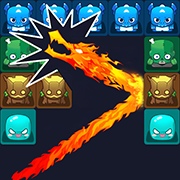
The interface provides a crucial numerical indicator on each golem, denoting remaining hit points. A common mistake observed by beginners is attempting to strike these armored targets directly without considering environmental factors. The optimal strategy involves destroying the wooden crates situated beneath specific golems first. This action triggers a domino effect: the crates collapse onto adjacent enemies, causing them to collide and bounce into one another. This chain reaction clears the screen efficiently, provided the player maintains distance from their own projectile during the chaotic finale.
Navigating Predatory Ecosystems
Conversely, survival mechanics in open-world titles like My Hungry Fish Game demand a completely different approach. Here, growth is not merely cosmetic; it is defensive. Starting as a small creature leaves the player vulnerable to larger predators lurking within the colorful aquatic environment.
- Eat Constantly: To outsize your threats, you must consume prey relentlessly. Starvation leads to regression, making you an easy target for sharks and barracudas that appear as soon as you cease feeding.
- Avoid Predators: While eating is mandatory, proximity to large fish increases the risk of being swallowed whole. This forces a difficult balancing act between growth and safety.
Tactical Considerations for Both Genres
How to Play I Am Cake No Cats · How to Play Iron Legion 0.28 · Cage Ballers Football Game Guide · SPOOKY BOXING Game Guide · Advanced Guide · Popular H5 Game · Popular H5 Game · High Score Tips · Walkthrough Tips · Walkthrough Tips · High Score Tips · Stuck? Check this out · Try this similar game · Want more? Keep playing · Stuck? Check this out
Cross-referencing these distinct environments reveals universal principles. In Tung Tung Tung Sahur, the "crash" mechanic relies on momentum, whereas in My Hungry Fish Game, size determines survival probability.
| Mechanic Type | Primary Goal | Risk Factor |
|---|---|---|
| Kinetic Chain Reaction | Crate destruction triggers enemy collisions. | Player collision with own projectile during impact phase. |
| Biological Growth | Ingesting prey increases body mass. | Predatory encounters that result in immediate elimination. |
| Target Vulnerability | Smaller targets require fewer hits to destroy. | Failing to hit smaller, faster-moving enemies first leaves larger ones intact. |
Avoiding Common Mistakes
Players often neglect the numerical indicators on golems in the first title, leading to wasted attacks on invulnerable shields. In the second title, the misconception that size alone guarantees safety persists; however, ignoring movement patterns of predators remains a fatal error.
Try These Games
Police Bus Driving | Skibidi Vent Jumper | Bus Stop Hero | Carletto Halloween Dreams
Quick Self-Check List
Before launching into any level, verify these three points:
- Momentum Check: Ensure I have pulled back the character fully before releasing them to hit the target. Insufficient charge results in a harmless bounce.
- Environment Scan: Identify crates or prey beneath targets before making contact. Prioritize destroying obstacles rather than enemies directly.
- Safety Distance: Position myself away from my own projectile after impact to avoid being struck back by the chain reaction in action titles, and maintain distance from predators while eating in survival titles.
At a Glance
| Factor | What Most Guides Say | What Actually Matters |
|---|---|---|
| Beginner | Start slow, build up | Dive into failure for rapid learning |
| Advanced | Follow pro strategies | Reverse-engineer failure modes |
| Learning | Linear progression | Alternating challenge/rest cycles |