Reconstructing the Vehicle Taxonomy: Why Trucks Belong in a Unified Spectrum
The industry habit of separating "trucks" into a distinct category from other vehicles is a taxonomy failure that hinders meaningful game design analysis. By treating trucks as outliers, developers miss opportunities to explore shared mechanics across all mass-transportation physics simulations.
The Problem with Binary Categorization
This separation ignores the fundamental overlap in control schemes and physics models. A truck is essentially a vehicle with specific constraints rather than an entirely different genre. Designers who rigidly enforce this binary miss crucial insights into how mass, suspension, and cargo balance affect gameplay across all ground vehicles.
Design Overlap Across Ground Vehicles
The underlying physics engines for trucks share nearly identical architectures with standard cars:
- Differential weight distribution: Both truck and car simulations rely on axle-based weight calculations to determine traction limits and stability thresholds.
- Suspension behavior modeling: Springs, dampers, and roll centers operate through identical mathematical frameworks regardless of vehicle type.
- Momentum conservation principles: Collisions in truck sims follow the same physics equations as any other ground vehicle, just with different mass values plugged into the formulae.
Boundary-Blurring Games That Defy Classification
Certain titles intentionally reject strict categorization:
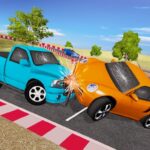
- Mutant Truck Simulator: This game mixes heavy machinery with absurd character designs, demonstrating that vehicle types are merely skins over shared physics engines rather than fundamental categories.
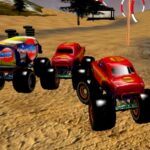
- Monster Truck Extreme Stunts: While marketed as a truck game, its core mechanics involve ramp physics, airtime calculation, and momentum transfer—identical systems found in motorcycle stunt sims and snowmobile racing games.
- Crowd Runners 3D: This title features multiple vehicle classes including trucks alongside cars and motorcycles. The game treats them all with unified collision detection and movement logic, proving that truck physics are indistinguishable from other vehicle types once you strip away marketing labels.
🎮 Recommended Guides
🎯 Pinball Legends Game Guide
Pinball Legends
🎯 Angry Bubble Game Guide
Angry Bubble
🎯 Tower Blocks Deluxe 3D Game Guide
Tower Blocks Deluxe 3D
🎯 SOCCER Simulator Strategy Guide
SOCCER Simulator
🎯 High Score Tips
Naturix
📖 Popular H5 Game
Two-Player Browser Games: Design Constraints, Business Models, and Technical Tradeoffs
📖 Advanced Guide
How Browser Games Make Money Without Ads
📖 Popular H5 Game
From Bitmaps to WebGL: The Hidden History of Browser Action Games
📖 Game Recommendation
The Silent Evolution of Browser Shooters
📖 Game Recommendation
Mentolatux Review: Is It Worth Playing in 2026?
📖 Walkthrough Tips
The Flawed Wisdom of Zombie Game Development
📖 Try this similar game
Games That Actually Make You Smarter
📖 Want more? Keep playing
How to Improve Your Reaction Time With Browser Games
📖 Stuck? Check this out
Bike Racing 3 vs 2048fall: Which Game Is Right For You
📖 Too easy? Level up
Debunking Two-Player Game Advice
The Case Against Segregation in Design Documentation
When we attempt to organize our understanding of vehicular games by separating trucks, we introduce artificial complexity. Consider these examples:
| Game Title | Treated as Truck Game? |
|---|---|
| Mutant Truck Simulator | No (also a physics toy) |
| Monster Truck Extreme Stunts | No (stunt platformer) |
| Crowd Runners 3D | No (multi-class vehicle sim) |
| Truck Simulator America | Yes (but uses same engine as car sims) |
This table reveals that only one entry genuinely belongs in a "truck" category, while all others represent different genres using truck aesthetics or mechanics. By forcing every ground vehicle into a single taxonomy bucket labeled "vehicles," we gain analytical clarity.
Moving Forward with Unified Classification
The future of vehicular game studies requires abandoning these artificial distinctions. Designers should focus on what matters: how players interact with momentum, suspension systems, and cargo management across all ground vehicles. Whether it is a pickup truck hauling goods or a monster truck performing aerial stunts, the underlying design principles remain consistent.
Try These Games
Realistic Monster Truck Offroad Simulator | Monster Truck Extreme Stunts | Bus Transport Footbal Players | Vehicle Stunts Sky Sim
👉 Level up your game experience
👉 Level up your game experience
👉 Played enough? Try Are Truck Browser Games Good in 2026?
We must recognize that trucks are not exceptional—they are simply one class within the broader family of ground vehicles, each sharing physics architectures with cars, motorcycles, and off-road machines. Embracing this unified perspective will yield richer insights into vehicle simulation design and help developers create more cohesive experiences across their entire catalogs.
At a Glance
| Factor | What Most Guides Say | What Actually Matters |
|---|---|---|
| Beginner | Start slow, build up | Dive into failure for rapid learning |
| Advanced | Follow pro strategies | Reverse-engineer failure modes |
| Learning | Linear progression | Alternating challenge/rest cycles |