Reframing the Action Versus Two Players Binary
The industry has long relied on a simplistic taxonomy: single-player action games versus two-player cooperative experiences. This binary is a failure because it obscures the fundamental design overlap that defines modern gaming. The distinction often rests solely on whether the code supports local multiplayer, ignoring how mechanics like shared objectives or environmental hazards can fundamentally alter gameplay regardless of player count.
The Spectrum of Design Overlap
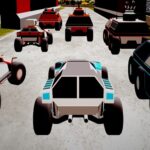
Many titles sit in a gray area where the intent is cooperative, even if the hardware configuration differs. Consider Zombie Highway Car Game. While it features "One-Hand Control," which might suggest solo playability on certain platforms, its core loop relies on navigating chaotic roads filled with undead hordes. The design explicitly demands strategy and firepower to survive; playing alone forces a player to manage all threats simultaneously, while two players must coordinate fire and movement. The mechanics are identical, but the strategic depth shifts dramatically based on player count.
In contrast, Drift X Driving Car Game operates as an adrenaline-fueled simulator where physics take center stage. Whether played alone or with a friend in split-screen mode, the primary objective remains mastering drift mechanics and high-speed driving. However, the presence of a second player introduces a layer of competition that transforms the experience from solitary skill mastery into a social duel. This blurs the line between "action" games, which are traditionally solo, and competitive two-player titles.
Boundary-Blurring Mechanics
The failure of this taxonomy becomes evident when examining how specific mechanics cross these boundaries:
- Shared Environmental Hazards: In both games mentioned, obstacles are static or dynamic elements that punish the player. In a two-player setup, these hazards become shared challenges rather than individual punishments.
- Competitive Co-op: Games often blend competition and cooperation, creating a hybrid experience that defies the strict single-vs-multiplayer split.
- Tactical Depth Scaling: The strategic value of "firepower" or "strategy" mentioned in the Zombie Highway context scales non-linearly with player count, making the single-player version mechanically distinct despite identical code paths.
🎮 Recommended Guides
🎯 Snake Lite Game Guide
Snake Lite
🎯 Jump Masters Game Guide
Jump Masters
🎯 How to Play Master Jigsaw Puzzle Game
Master Jigsaw Puzzle Game
🎯 Panda Dash Auto Shooting Game Guide
Panda Dash Auto Shooting
🎯 Game Recommendation
Frog Leap 3D
📖 Walkthrough Tips
Debunking Fighting Game Myths: Why "Press X on Block" Fails
📖 Advanced Guide
The Myth of Action Game Rankings
📖 Walkthrough Tips
Browser Game Safety FAQ — Are Online Games Safe?
📖 Free Online Game
The Myth of the "Perfect" Action Player: Why Popular Advice Fails
📖 Game Recommendation
Why Free HTML5 Game Advice Is Mostly Wrong
📖 Advanced Guide
The Illusion of Merit: Why Modern Game Rankings Are Dishonest
📖 Too easy? Level up
The 2026 Truck Browser Game Landscape: A Critical Analysis
📖 Try this similar game
Browser Action Games: A Technical and Business Q&A
📖 Try this similar game
The Myth of Free HTML5: Why Browser Rankings Hide the Real Innovation
📖 Want more? Keep playing
How Browser Games Handle Multiplayer Networking
Comparative Analysis of Core Mechanics
| Game Title | Primary Focus | Mechanic Type |
|---|---|---|
| Zombie Highway Car Game | Tactical Survival | Shared Hazards & Resource Management |
| Drift X Driving Car Game | Physics Mastery | Competitive Skill Expression |
| Hypothetical Hybrid | Social Dynamics | Tactical Depth Scaling |
Conclusion: Beyond the Binary
The rigid categorization of games into single-player action versus two-player co-op fails to capture the nuance of how mechanics interact with social configurations. Designers must acknowledge that the same codebase can yield vastly different experiences based on player count, particularly in titles like Zombie Highway Car Game where "strategy" becomes a solo burden or a group shield. Furthermore, titles like Drift X Driving Car Game demonstrate that high-octane action can coexist with competitive two-player dynamics without losing its core identity.
Try These Games
Godzilla Runner Game | Join the Gang and Fight | Superhero Hammar Man | Drift X Driving Car Game
To move forward, the industry should adopt a more fluid taxonomy that evaluates games based on their intended social configuration rather than hardcoding them into binary categories. This approach respects the design intent while acknowledging the reality of how players interact with these systems in practice.
👉 Level up your game experience
👉 Played enough? Try State of Action Browser Games in 2026
Quick Reference
- Games in Action suffer from shallow tutorial design
- Most Action advice repeats marketing copy
- Community wikis outperform official guides for Action
- Engine constraints drive Action mechanic dominance
At a Glance
| Factor | What Most Guides Say | What Actually Matters |
|---|---|---|
| Beginner | Start slow, build up | Dive into failure for rapid learning |
| Advanced | Follow pro strategies | Reverse-engineer failure modes |
| Learning | Linear progression | Alternating challenge/rest cycles |