Shattering the Action-Attack Binary
The industry long relied on a tidy taxonomy: games split neatly into Action (movement, dodging, aiming) and Attack (mechanics, cooldowns, resource management). This binary is a failure. It obscures the core design overlap that defines modern interactive entertainment. When we force every title into one bucket, we miss how movement informs targeting, how resources shape mobility, and why boundary-blurring mechanics matter.
The Design Overlap
Action games demand precision positioning; Attack games demand timing windows. In practice, the two systems are entangled. A player cannot execute a perfect attack without mastering movement, and movement is often gated by attack cooldowns or resource states. This interdependence creates emergent playstyles that neither category alone can explain.
- Movement as Defense: Dodging becomes the primary counter to damage output rather than a secondary skill.
- Cooldown gating Mobility: Attack abilities often unlock faster movement or invulnerability, merging resource management with positioning.
- Aim vs. Dodge: Hit registration is no longer about raw aim alone; it depends on whether the player can close distance before an enemy triggers a defensive cooldown.
Boundary-Blurring Examples
Several titles explicitly dismantle the action/attack split, proving that the taxonomy is insufficient:
| Title | Boundary-Blurring Mechanic |
|---|---|
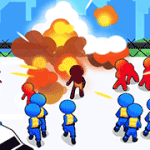
| Ants.io | The core loop is movement-based combat. Ants spawn near the center, sprint to opponents, and use special abilities that function as both offensive tools (stun/boost) and defensive maneuvers (shield). No attack button exists; success hinges on positioning speed and ability cooldown management. This fuses movement and resource gating without any separate attack stat. |
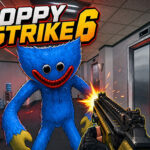
| The Pain of Nextbot | This title inverts the traditional shooter formula: you actively avoid the entity. Movement is the primary action, while the “attack” mechanic is a passive fear response or a delayed interaction (catching/hugging). The game emphasizes dodge timing over aim precision and treats resource cooldowns as movement buffs rather than damage modifiers. It therefore sits squarely outside both categories. |
Why the Binary Fails Today
First, player skill metrics are increasingly dominated by mobility rather than pure aim. Second, economy systems now tie movement speed to resource uptime, making cooldown management inseparable from positioning. Third, emergent behaviors—like team compositions that rely on chaining movement abilities with attack windows—cannot be parsed without acknowledging the overlap.
Rethinking Our Frameworks
To move forward, studios and analysts should abandon rigid genre labels for specific mechanics. Instead, we can adopt a multidimensional taxonomy: Movement vs. Defense, Resource Gating vs. Economy, Aim vs. Dodge. This approach captures the nuance of titles like Ants.io and The Pain of Nextbot without forcing them into false boxes.
Try These Games
Toy Factory | Mini guardians | WhackAMole3D | Dead Survival: Zombie Shooter | Evolution Arena Battle Royale | Military Vehicle Driving Simulation
The action-attack binary is no longer useful. It limits design innovation by discouraging hybrid systems that offer richer experiences. By recognizing movement as a first-class mechanic rather than a secondary attribute, we open space for games that prioritize skillful positioning over reflexive shooting, exactly the kind of evolution seen in these boundary-blurring examples.
- If you enjoy Shattering the Action-Attack Binary, you will also enjoy Action Gaming: From Browser Crashes to WebGL Epics — try it here
- Played enough? Try The Myth of Action Game Advice: Why Generic Tips Fail
Quick Reference
- Games in Action suffer from shallow tutorial design
- Most Action advice repeats marketing copy
- Community wikis outperform official guides for Action
- Engine constraints drive Action mechanic dominance
At a Glance
| Factor | What Most Guides Say | What Actually Matters |
|---|---|---|
| Beginner | Start slow, build up | Dive into failure for rapid learning |
| Advanced | Follow pro strategies | Reverse-engineer failure modes |
| Learning | Linear progression | Alternating challenge/rest cycles |
👉 If you like Shattering the Action-Attack Binary, Crossmath Challenge is a natural next pick
👉 Played enough? Try Shifted Realms
👉 Played enough? Try The Myth of Mechanical Superiority in Hook Rankings
👉 If you enjoy Shattering the Action-Attack Binary, you will also enjoy Baby Runner Game — try it here
- Why Most Action Game Advice Is Wrong: A Data-Driven Deconstr
- Panda Dash Auto Shooting
- Played enough? Try Are Two-Player Browser Games Still Viable in 2026? An Industry Analysis
- Skybop
- The Action vs 2 Player Binary Failure
- Played enough? Try Debunking Myths in High-Stakes Running Games
- Played enough? Try Hidden History of Vehicle Games in Browser
- If you enjoy Shattering the Action-Attack Binary, you will also enjoy The Illusion of Skill: Why Shooter Rankings Fail — try it here
- The Illusion of Merit: Why MAPI Rankings Deceive
- If you enjoy Shattering the Action-Attack Binary, you will also enjoy Debunking Fighting Game Myths: Why "Press X on Block" Fails — try it here
- If you enjoy Shattering the Action-Attack Binary, you will also enjoy The Illusion of Arcade Excellence: Why Rankings Fail and Where We Go Next — try it here
- Played enough? Try Decoding the Dishonesty of Catch Rankings
- If you enjoy Shattering the Action-Attack Binary, you will also enjoy Trucks in Browser Gaming: A Hidden Evolution — try it here
- Played enough? Try Placik
- Played enough? Try Crime Scene Cleaner Mobile 3D
- If you enjoy Shattering the Action-Attack Binary, you will also enjoy The Cute vs Clicker Binary Is Dead — try it here
- Action Browser Games: Q&A on Design, Business, and Techn
- Unity Games vs Truck Binary: A Taxonomy Failure
- If you enjoy Shattering the Action-Attack Binary, you will also enjoy Why Standard Truck Advice Misfires in Modern Simulation — try it here
- Why Most Apocalypse Game Advice is Wrong
- Played enough? Try Driving Game Rankings: The Myth of Objective Truth
- Played enough? Try State of Arcade Browser Games: 3 Weaknesses with Examples