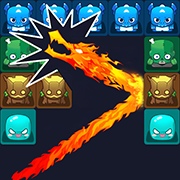
Strategy vs Survival: A Deep Dive into Logic and Brain Games
The gaming landscape is deeply divided between two primary genres that cater to distinct cognitive preferences. On one side stand strategy titles like Citadel: Fortress Defense, which demand complex system management and forward planning. On the other are survival games such as My Hungry Fish Game, where reflexes and adaptive resource gathering take precedence. Both categories offer profound intellectual engagement, but their mechanics differ significantly in how they challenge the player.
Mechanics: Structure versus Chaos
Citadel: Fortress Defense exemplifies the structured nature of logic games. The gameplay loop follows a strict temporal rhythm: during the day phase, players must construct buildings including walls, gates, houses, farms, sawmills, quarries, towers, barracks, a market, and a mage tower. Each structure serves a specific function within a larger economic system. Players gather wood, stone, and gold to fund these constructions, requiring careful allocation of limited resources before the night phase arrives. This environment rewards players who excel at mathematical modeling, spatial planning, and predictive thinking.
In stark contrast, My Hungry Fish Game operates on principles typical of brain-training or reflex-based survival titles. The core mechanic is continuous motion: starting as a small fish, players must navigate a colorful sea teeming with both tasty prey and dangerous predators. Survival depends entirely on real-time decision making—identifying food sources while avoiding threats. This genre favors rapid processing speed, pattern recognition under pressure, and situational awareness rather than long-term architectural planning.
The Difficulty Curve
The progression in Citadel: Fortress Defense is linear but steep. Early days teach the basics of gathering and placement, but as towns grow larger, the complexity increases exponentially. A single oversight in construction can lead to catastrophic failure during raids because the rigid framework offers no room for improvisation once a raid begins.
Offroad Jeep Hills Driving Strategy Guide · Shooter Zombie Survival Game Guide · Little Farm Strategy Guide · How to Play Worlds Deepest Hole · Walkthrough Tips · Game Recommendation · Popular H5 Game · High Score Tips · Walkthrough Tips · Walkthrough Tips · Advanced Guide · Want more? Keep playing · Too easy? Level up · Try Another Game · Try Another Game
My Hungry Fish Game presents a different difficulty profile: immediate and fluid. The challenge is constant rather than cumulative in the same way. As the player grows, new predators appear, forcing quicker reactions. The curve rewards practice and muscle memory rather than study of systems.
Try These Games
Hidden Shop Hunt | Pixel Car Memory Quest | Overstuffed | Slime Buffet
Which Type Suits Which Player
- Citadel: Fortress Defense suits players who enjoy methodical planning, statistical optimization, and seeing the tangible results of their architectural decisions. It appeals to those comfortable with spreadsheets-like interfaces where every wall and tower has a calculated purpose.
- My Hungry Fish Game is ideal for action-oriented thinkers who thrive on immediate feedback loops. These players prefer dynamic environments where mistakes are punished quickly but recovery opportunities exist if reflexes remain sharp.
Recommendation
For a newcomer to the genre, Citadel: Fortress Defense offers a richer long-term engagement arc with deep strategic depth that scales well beyond beginner levels. However, for those seeking instant gratification and constant mental stimulation without the need for extensive planning phases, My Hungry Fish Game provides a more accessible entry point. Ultimately, both genres offer valid paths to mastery; the choice depends entirely on whether one prefers the satisfaction of building a thriving empire or the thrill of surviving in a perilous ecosystem.
Quick Reference
- Games in Logic suffer from shallow tutorial design
- Most Logic advice repeats marketing copy
- Community wikis outperform official guides for Logic
- Engine constraints drive Logic mechanic dominance
At a Glance
| Factor | What Most Guides Say | What Actually Matters |
|---|---|---|
| Beginner | Start slow, build up | Dive into failure for rapid learning |
| Advanced | Follow pro strategies | Reverse-engineer failure modes |
| Learning | Linear progression | Alternating challenge/rest cycles |
Scorecard
| Criterion | Average Logic Game | Best-in-Class |
|---|---|---|
| Depth | Surface-level mechanics | Emergent complexity |
| Polish | Functional but forgettable | Attention to feel and feedback |
| Innovation | Iterates on proven formulas | Genuinely new interactions |