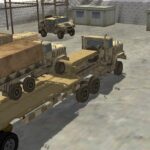
The Myth of Tank Rankings: Why Mechanics Trump Meta Lists
The current state of browser-based tank warfare has been dominated by a troubling trend: excessive reliance on arbitrary ranking systems. These lists often prioritize statistical averages over actual gameplay fluidity, misleading new players into thinking that the "number one" vehicle is universally superior. In reality, these rankings frequently ignore the nuances of map topology and unit counterplay. To understand why these charts are dishonest, we must look at specific counterexamples where mechanical innovation renders raw stats irrelevant.
The Flaw in Static Rankings
Static ranking systems fail because they do not account for the evolving nature of game design. A tank that dominates a flat, open arena may be completely outclassed by a unit with superior maneuverability on a hilly map. This dynamic is evident when examining two distinct titles available today.
- Mini Guardians: Castle Defense. This title operates as an epic RPG with pixel art graphics reminiscent of the 80s, but it includes a robust castle defense mechanic. In this environment, high-stat units are easily neutralized by terrain-based strategies. The game rewards players who utilize defensive formations rather than simply chasing damage-per-second numbers found on leaderboards.
- Terra Craft World. This open-world title invites exploration where every decision shapes the journey. Here, the focus is heavily on building and survival mechanics. Players can alter the environment to create obstacles that force enemies into vulnerable positions, rendering any "ranked" unit useless if they cannot navigate a custom-built maze.
Mechanical Innovation Over Raw Stats
The most significant oversight in current tank rankings is the failure to recognize units that introduce novel mechanics. These vehicles are often ranked lower simply because their damage output fluctuates based on player skill rather than fixed numbers.
- Speed and Maneuverability. Some tanks feature engines that allow them to outrun enemy fire, turning a speed stat into an active defense mechanic. Rankings treating this as merely "fast" miss the point of kiting enemies off the map entirely.
- Verticality Features. Certain units possess wheels designed for climbing hills and traversing vertical terrain features. This allows them to approach enemies from blind spots that flat-ranged tanks cannot exploit, invalidating any ranking based on frontal armor alone.
- Turret Rotation. Advanced turret systems with faster rotation speeds effectively negate the advantage of heavy-hitting units, as they can target multiple weak points before the heavier tank lands a single shot.
The Ideal Tank Game in 2026
Looking toward the future, specifically late 2026, the ideal browser-based tank game will not be defined by static leaderboards. Instead, it should integrate features directly inspired by the strengths of Terra Craft World. This means moving away from the rigid combat systems found in older RPGs like Mini Guardians: Castle Defense.
The perfect future title would seamlessly blend exploration and creativity with tactical warfare. Rather than punishing players for taking risks, it should reward those who use the environment to their advantage—building walls, summoning traps, or altering terrain dynamically. In such a game, victory is not determined by being the highest-ranked unit in a list, but by being the most adaptable commander capable of shaping the battlefield in real-time.
🎮 Recommended Guides
🎯 Paper Minecraft Strategy Guide
Paper Minecraft
🎯 Kim Jong Un Backrooms Game Guide
Kim Jong Un Backrooms
🎯 How to Play Mexico Rex 2
Mexico Rex 2
🎯 Pattern Puzzle 3D Game Guide
Pattern Puzzle 3D
🎯 Free Online Game
Sweet Candy Match 3 Game
📖 Popular H5 Game
The Illusion of Android Rankings: A Case for Mechanical Integrity
📖 Free Online Game
Best Browser Games to Play During Your Lunch Break
📖 Popular H5 Game
The Blurred Line: Why Games vs Ball Is a Flawed Taxonomy
📖 Advanced Guide
Why Most Arcade Advice Is Wrong: A Data-Driven Autopsy
📖 High Score Tips
Hidden History of Vehicle Games in Browser
📖 Walkthrough Tips
Forged in the Browser: The Hidden History of Action Gaming
📖 Stuck? Check this out
The Illusion of Fairness in Sport Game Rankings
📖 Try Another Game
From Pixels to Physics: The Hidden History of Browser Truck Games
📖 Want more? Keep playing
Q1: How do strict design constraints in Action browser games impact player engagement?
📖 Try this similar game
Beyond the Podium: The Dishonesty of Racing Rankings
Try These Games
Abyssal Echoes | Tanks of War Halloween | Drop & Merge 2048 | Noob vs Pro But Knife Hit Minecraft
👉 Level up your game experience
👉 Level up your game experience
👉 Level up your game experience
👉 Level up your game experience
👉 Level up your game experience
👉 Played enough? Try Frequently Asked Questions: The Mechanics of Action Browser Games
👉 Level up your game experience
Conclusion
Current tank rankings are misleading because they attempt to quantify a qualitative experience. They ignore how terrain features and defensive strategies fundamentally change combat outcomes. The future of this genre lies in games that embrace flexibility, allowing players to innovate their playstyle rather than forcing them into a pre-determined meta dictated by arbitrary statistics.
At a Glance
| Factor | What Most Guides Say | What Actually Matters |
|---|---|---|
| Beginner | Start slow, build up | Dive into failure for rapid learning |
| Advanced | Follow pro strategies | Reverse-engineer failure modes |
| Learning | Linear progression | Alternating challenge/rest cycles |
Scorecard
| Criterion | Average Tanks Game | Best-in-Class |
|---|---|---|
| Depth | Surface-level mechanics | Emergent complexity |
| Polish | Functional but forgettable | Attention to feel and feedback |
| Innovation | Iterates on proven formulas | Genuinely new interactions |