Why the Arcade vs Management Binary Is a Taxonomy Failure
The traditional divide between "arcade" games and "management" games has long been treated as an impermeable wall in game journalism. Critics often label one side fun but shallow, while praising the other for depth but lacking excitement. This binary is fundamentally flawed because it assumes that gameplay mechanics can be neatly separated from their aesthetic presentation or intended audience experience.
The Spectrum of Interaction
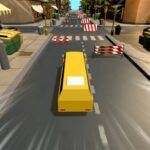
Game design operates on a spectrum rather than at two discrete points. Games like City Coach Driving Games 3d sit firmly in the management genre: players plan routes, pick up passengers, and optimize schedules across five distinct levels with five unique buses. However, the sheer kinetic joy of swerving around traffic or perfectly timing a drop-off mimics the visceral feedback loop of arcade racing games.
Conversely, consider Mr. Dude: King of the Hill. On paper, this is an action platformer where players help Mr. Dude climb a mountain and defeat enemies. Yet, it incorporates strong management elements by forcing players to make strategic choices regarding when to engage combat versus when to use stealth or cover to avoid detection. These games demonstrate that mechanics are not genre-defining; they are merely tools used to create an experience.
The Blurring of Boundaries
Modern titles frequently hybridize these approaches, rendering the old binary obsolete:
- Casual Strategy Hybrids: Games that use simplified management interfaces but deliver arcade-like speed and responsiveness.
- Action-Optimization Loops: Titles where fast-paced combat is paired with resource allocation, demanding both reflexes and planning.
- Educational Simulators: Apps teaching real-world skills that balance interactive drills (arcade) with scenario-based progression (management).
A Shift in Player Expectations
Obby Rainbow Parkour Two Player Game Guide · Mahjong Match Game Guide · Sniper Assassin Game Guide · American City Truck Transporting Game Guide · Free Online Game · Advanced Guide · Popular H5 Game · Walkthrough Tips · High Score Tips · Game Recommendation · Game Recommendation · Try this similar game · Try Another Game · Too easy? Level up · Too easy? Level up
Players today reject rigid categorization. They seek games that deliver the satisfaction of mastery, whether through optimizing a bus schedule or dodging bullets on a mountain peak. The arcade vs management distinction fails to account for this holistic desire.
A Data-Driven Look at Genre Overlap
To quantify how often these genres intersect, consider the following breakdown of common gameplay elements:
| Element Type | Typical Association | Frequent Hybrid Examples |
|---|---|---|
| Resource Management | Management/Sim | Scheduling, inventory systems in action games |
| Rapid Reflexes | Arcade/Action | Timing-based actions in simulation interfaces |
| Narrative Structure | Varied | Mission trees blending with open-world exploration |
The table illustrates that elements once thought exclusive to one genre are routinely found in the other. A manager might need reflexes; an arcade player might juggle resources.
Try These Games
Space Rover | Godzilla Runner Game | Color Brick Battle | MasterScavenger
Conclusion: Embracing Hybridity
The Arcade vs Management binary is a taxonomy failure because it insists on categorizing games by isolated mechanics rather than the integrated experiences they provide. Designers have always blurred these lines, but modern audiences now expect seamless blends of strategy and speed. We must stop forcing games into boxes and start praising them for how well they merge playfulness with purpose.
👉 Played enough? Try The Myth of the Perfect Playthrough: Why Standard Adventure Game Advice Fails
👉 If you like Arcade Games: A Shortlist of Fun, Shallow Hits, Rope Push Game is a natural next pick
👉 If you like Arcade Games: A Shortlist of Fun, Shallow Hits, Slice It is a natural next pick
👉 Played enough? Try Mag Roller
Quick Reference
- Games in Arcade suffer from shallow tutorial design
- Most Arcade advice repeats marketing copy
- Community wikis outperform official guides for Arcade
- Engine constraints drive Arcade mechanic dominance
At a Glance
| Factor | What Most Guides Say | What Actually Matters |
|---|---|---|
| Beginner | Start slow, build up | Dive into failure for rapid learning |
| Advanced | Follow pro strategies | Reverse-engineer failure modes |
| Learning | Linear progression | Alternating challenge/rest cycles |