Brain Browser Games: FAQ on Design, Business, and Tech
Why are browser games designed differently than native apps?
The core constraint is the execution environment. Unlike native mobile or desktop titles that can leverage thousands of megabytes of ROM and high-power GPUs, a Brain browser game must run inside a limited sandbox—typically an HTML5 canvas with strict memory ceilings. Designers therefore favor lightweight asset pipelines: compressed sprites, procedural generation, and minimal texture resolution. This shapes gameplay loops toward rapid iteration; players expect instant load times and low-latency input response because the network round-trip adds overhead that native apps do not face.
These technical tradeoffs cascade into business decisions. Since distribution is free and instant, monetization leans heavily on microtransactions rather than upfront purchases. Ads become a primary revenue stream, but intrusive interstitials degrade retention; thus, designers integrate reward-based video ads and banner placements that respect the “brain” aesthetic of clean UI.
How do design choices affect player experience?
- Performance over fidelity: High-poly models or heavy post-processing shaders are replaced by simple geometric primitives. For example, in a game like Twist Your Path—where the character runs along a rotating trunk and players must turn paths precisely—the rendering budget is spent on smooth camera follow and minimal particle effects rather than detailed textures.
- Input latency: Keyboard/mouse or touch events are processed as quickly as possible, often bypassing heavy physics middleware that would slow the frame. This keeps reaction-based gameplay crisp.
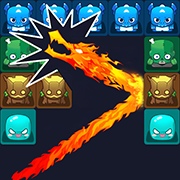
- Asset streaming: Levels may be generated on the fly to reduce initial download size. In Slime Buffet, a feast of color with 100 candy mosaic levels, designers stream new tilemaps as needed instead of loading everything at once.
What are common monetization models?
The most frequent approach is the "free-to-play" model supported by:
- Rewarded video ads: Players watch a short clip to earn in-game currency or hints.
- In-app purchases: Energy refills, cosmetic skins, or ability boosts.
- Banner and native ad placements: Low-disruption units that preserve the "brain" clean look.
a survival legend Game Guide · Turbo Colis Game Guide · Block Tower Smash Game Guide · Horse Racing Game Guide · Advanced Guide · Popular H5 Game · Beginner's Guide · Walkthrough Tips · Popular H5 Game · Popular H5 Game · High Score Tips · Stuck? Check this out · Stuck? Check this out · Stuck? Check this out · Stuck? Check this out
This mix works well because it respects the low-friction nature of browser access—users can start instantly without downloading a package. However, aggressive monetization can hurt session length if the economy feels exploitative; balancing is key.
Technical tradeoffs in engine and language choice
Most Brain browser games use vanilla JavaScript or lightweight frameworks (e.g., Phaser) because they ship without build steps and run on any device. C++ or Unity projects are generally too heavy unless the developer precompiles to WebGL with significant optimization.
Performance tuning checklist
To keep FPS stable under tight budgets, developers follow these practices:
Try These Games
Candy Sort | Puzzle Arc | Happy Orange Glass | Wedding Rush Race
- Prioritize CPU-bound logic over GPU-heavy rendering when possible; use simple geometric shapes for collisions and visual feedback.
- Limit entity counts per frame. For a crowded scene like Slime Buffet, batch draw calls and reuse sprite atlases to reduce state changes.
- Avoid heavy audio mixing on every event; pool sound instances where feasible.
- Use delta time for animations so they remain smooth regardless of frame rate variations across browsers.
Future outlook
As WebAssembly matures, we may see more C++-style performance in browser games. Yet the core DNA of Brain titles—minimalist design, instant load, ad-supported monetization—will likely persist because it matches user expectations for frictionless, data-light play.
At a Glance
| Factor | What Most Guides Say | What Actually Matters |
|---|---|---|
| Beginner | Start slow, build up | Dive into failure for rapid learning |
| Advanced | Follow pro strategies | Reverse-engineer failure modes |
| Learning | Linear progression | Alternating challenge/rest cycles |
Scorecard
| Criterion | Average Brain Game | Best-in-Class |
|---|---|---|
| Depth | Surface-level mechanics | Emergent complexity |
| Polish | Functional but forgettable | Attention to feel and feedback |
| Innovation | Iterates on proven formulas | Genuinely new interactions |