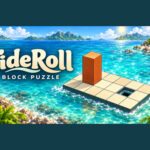
Casual vs Puzzle: A Comparative Analysis
The landscape of digital entertainment is dominated by two distinct pillars: casual games and puzzle games. While both aim to entertain, they diverge sharply in design philosophy, mechanical depth, and player retention strategies. This analysis examines their core differences and identifies which demographic resonates with each category.
Mechanical Foundations
Casual games are engineered for accessibility above all else. Their mechanics prioritize fluid motion, immediate feedback loops, and low cognitive load. The objective is often resource accumulation or territory control rather than solving a specific logic problem. In contrast, puzzle games rely on structured systems where player success hinges on understanding rules, recognizing patterns, and executing precise sequences of actions.
The Difficulty Curve
- Casual: Features an exponential or linear progression that becomes increasingly punishing. Success depends on skill mastery over time (e.g., reflexes in a shooter). Failure is typically attributed to lack of practice rather than a logical error.
- Puzzle: Follows a gated progression model. Early levels are designed to teach core mechanics; subsequent levels increase complexity only after the player demonstrates comprehension. Difficulty spikes are deliberate and finite, not arbitrary.
Player Suitability
Casual titles appeal to players seeking relaxation or competitive engagement without a steep learning curve. They serve as digital comfort food—engaging but rarely requiring deep thought. Puzzle games attract the analytical crowd: individuals who derive satisfaction from solving problems, optimizing systems, and uncovering hidden truths through logic.
Case Studies in Design
To illustrate these divergences, we examine two recent releases that exemplify their respective genres.
How to Play Classic Car Parking 2025 · Warehouse Tetris 3D Game Guide · Forest Fortune Game Guide · How to Play Mad Cars 3d Game · Popular H5 Game · Advanced Guide · Free Online Game · Game Recommendation · Advanced Guide · Popular H5 Game · High Score Tips · Try Another Game · Try Another Game · Try this similar game · Stuck? Check this out
| Game Title | Genre Focus |
|---|---|
| Dig to the Weirdest World | Casual / Action |
| DNA Evolution 3D | Puzzle / Strategy |
Dig to the Weirdest World is a colorful 3D mining adventure. The core loop involves steering a drill underground, collecting valuable discoveries, and selling cargo to upgrade power, energy, and storage. The game offers eight distinct drilling rigs with unique characteristics. Players can utilize shockwave abilities to clear debris, turbo boosts for rapid excavation, and scanner tools to identify high-yield deposits. These mechanics prioritize fluid interaction and resource management rather than logical problem-solving.
DNA Evolution 3D, conversely, presents a structured challenge. The player must choose an initial form (human or animal) and combine them with another entity to create a powerful new life form ready for competition. Success depends on understanding the merging rules, predicting outcomes, and strategically selecting combinations that yield competitive advantages in races. This is a classic gated progression: early merges teach the mechanics; later stages require complex optimization.
Conclusion
The distinction between casual and puzzle genres remains fundamental to player experience design. Casual games like Dig to the Weirdest World offer immediate gratification through action and exploration, while puzzle games like DNA Evolution 3D provide satisfaction derived from logical mastery.
Try These Games
Park Draw Game | Infinity Sky | Highway Car Racer | Sniper Master
Recommendation: For a player seeking relaxation or casual entertainment, titles focusing on fluid mechanics and resource accumulation are ideal. However, for those looking to engage deeply with the medium—thinking critically, optimizing strategies, and enjoying the satisfaction of solving complex problems—puzzle games offer an unparalleled depth that casual counterparts simply cannot match.
👉 Played enough? Try Ring Clash
Quick Reference
- Games in Casual suffer from shallow tutorial design
- Most Casual advice repeats marketing copy
- Community wikis outperform official guides for Casual
- Engine constraints drive Casual mechanic dominance
At a Glance
| Factor | What Most Guides Say | What Actually Matters |
|---|---|---|
| Beginner | Start slow, build up | Dive into failure for rapid learning |
| Advanced | Follow pro strategies | Reverse-engineer failure modes |
| Learning | Linear progression | Alternating challenge/rest cycles |