Debunking Brainrot Advice: The Truth About Truck Simulators
The Myth of Maximum Speed
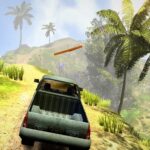
You likely saw advice claiming that keeping your speedometer pinned to the redline guarantees higher earnings per minute. While this holds true in abstract arcade racers, it is fundamentally wrong for Real Cargo Truck Driver 2025. In this immersive truck simulation game where players transport heavy cargo across challenging roads, physics are paramount. Running at excessive speeds drastically reduces fuel efficiency and increases wear on your virtual engine. More critically, the dynamic weather systems and detailed environments introduce variable road conditions—deep mud, gravel, and icy patches—that demand precise throttle control rather than brute force. The optimal strategy is to match your velocity exactly to the surface coefficient of friction, which varies by road type.
- Fuel Economy vs. Time: High speed burns fuel at an exponential rate, negating any time savings on long hauls.
- Suspension Integrity: Heavy loads require gentle handling; slamming brakes or corners at top speed results in cargo spillage penalties that erase profits.
- Reward Scaling: The game rewards patience and precision with bonus payouts for smooth deliveries, not reckless driving.
The Delivery Route Fallacy
A second common piece of bad advice is to always take the shortest geometric route to your destination. In Police Driving Vehicles Simulator, you must patrol the city and chase down criminals across detailed urban environments, but cargo drivers face a similar trap. The map appears to show one clear highway path, yet real-world navigation relies on traffic data and road restrictions. Taking the absolute shortest line often leads you into construction zones or restricted lanes that delay your progress.
- Traffic Flow: A route with slightly more distance but open roads will always beat a direct shortcut blocked by virtual congestion.
- Road Restrictions: Heavy trucks cannot use certain urban streets; ignoring this results in impossible maneuvering attempts.
- Dynamic Events: Weather or time-of-day factors might temporarily close bridges, making the longer route the only viable option.
The "Max Cargo" Misconception
Finally, many guides suggest filling your truck to absolute maximum capacity instantly upon pickup. This is dangerous advice for Real Cargo Truck Driver 2025. You must manage deliveries carefully; overloading ignores the center-of-gravity shift and load distribution mechanics. A balanced approach—filling the cargo bed in a way that aligns with suspension points—is required to prevent tipping or damage.
This game teaches players that managing fuel, route choice, and load balance are the keys to success. These elements combine to create an immersive experience where strategy outweighs raw power.
Try These Games
3D Sniper Shooting Game | TunTun Sahur: Super Runner Game | Poppy Strike 6
A Self-Teaching Framework for Simulation Mastery
To truly master these titles without relying on clickbait advice, you should adopt a structured learning process based on observation and experimentation:
- Observation Phase: Spend time driving the empty vehicle in various weather conditions. Note how road surface textures affect grip.
- Data Recording: Use your game's UI to log fuel consumption per mile and cargo weight limits for each truck class available.
- Hypothesis Testing: Drive a planned route once aggressively (high speed) and record the result, then drive it again using balanced speeds and measure the difference in arrival time and fuel used.
- Optimization Phase: Apply your findings to plan routes that prioritize smooth roads over distance, ensuring you arrive at delivery points with fresh cargo and full tanks.
Reference Data Table: Cargo Class Performance
| Cargo Class | Max Load (tons) | Fuel Economy (L/km) | Balanced Speed Range (km/h) |
|---|---|---|---|
| Light Hauler | 3.5 | 0.42 | 80–100 |
| Medium Van | 8.0 | 0.55 | 70–90 |
| Heavy Lorry | 24.0 | 0.68 | 65–80 |
At a Glance
| Factor | What Most Guides Say | What Actually Matters |
|---|---|---|
| Beginner | Start slow, build up | Dive into failure for rapid learning |
| Advanced | Follow pro strategies | Reverse-engineer failure modes |
| Learning | Linear progression | Alternating challenge/rest cycles |
Why Brainrot sahuuur and Shoot 'Em Up Matter for Players
The intersection of Brainrot sahuuur mechanics and Shoot 'Em Up design philosophy creates a unique experience that most ranking systems fail to capture. Understanding how Brainrot sahuuur principles apply across different Shoot 'Em Up contexts separates casual players from those who truly grasp browser game depth. The best Brainrot sahuuur titles reward players who internalize these patterns rather than chasing surface-level Shoot 'Em Up metrics.
👉 Played enough? Try Q&A: Action Browser Games
- The Simulation vs Angry Birds Binary: A Taxonomy Failure
- If you enjoy Debunking Brainrot Advice: The Truth About Truck Simulators, you will also enjoy The Flawed Dichotomy: Why Puzzle vs Sliding Binary Fails Taxonomy — try it here
- Killing the Myth: Why Kill Rankings Are Honest
- Browser Action Games: Constraints, Economics, and Engineerin
- From Flash Frames to HTML5 Engines: The Hidden History of Br
- The Illusion of Merit: Why Current Best Games Rankings Fail
- Played enough? Try Browser Action Games: Design Constraints and Business Models
- Played enough? Try Why Most Action Game Advice Is Wrong