Decoding the Play: Mechanics, Curves, and Player Fit
In the vast landscape of digital entertainment, two distinct pillars emerge when analyzing core interaction loops. On one side lie games defined by strategic depth and resource management, while on the other sit titles focused on rapid-fire reflexes and precision timing. To understand these genres properly, we must examine their mechanics, difficulty trajectories, and the specific player archetypes they attract.
The Strategic Architect: Verdant Wilds
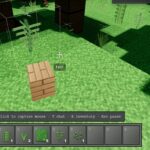
Verdant Wilds operates as a quintessential representative of the survival-puzzle genre. The core loop involves exploring an isometric voxel world to gather fundamental resources such as wood, stone, and ores. Once collected, the player must craft tools, erect campfires, and build shelters. This process naturally extends into mining deep caves and discovering mysterious dimensions.
The difficulty curve in Verdant Wilds is gradual yet punishingly long. Early stages focus on simple gathering mechanics, but as the player delves deeper, survival becomes precarious. The game demands careful planning around limited slots for inventory management and strategic placement of defenses against environmental hazards.
The Tactical Shooter: Pixel Shooter Puzzle
In stark contrast stands Pixel Shooter Puzzle, a colorful 3D title where every cannon choice counts. Players select cannons from the front of the queue to blast matching blocks off a rotating voxel model. The primary objective is to reveal layers underneath without getting trapped by falling debris or time limits.
This game features a sharp, immediate difficulty spike. The mechanic revolves around limited slots and strict timing. Success requires precise spatial reasoning rather than long-term resource planning. Each move is final; there is no undo button, forcing players to commit fully to their tactical decisions.
How to Play Robotu Rebellion · Car Sort Game Guide · GOBLOX: Grow Your Empire Strategy Guide · How to Play Traffic Jam Car Puzzle Game · Beginner's Guide · Beginner's Guide · Advanced Guide · High Score Tips · Beginner's Guide · High Score Tips · Popular H5 Game · Want more? Keep playing · Stuck? Check this out · Try Another Game · Want more? Keep playing
Tactical Resource Comparison
| Metric | Puzzle/Strategy Games | Shooter/Action Games |
|---|---|---|
| Primary Focus | Long-term planning, resource gathering | Immediate reflexes, spatial precision |
| Error Tolerance | High (can rebuild or gather again) | Low (moves are often final) |
| Cognitive Load | Sustained attention over hours | Bursty, high-intensity bursts |
Recommendation: Match the Mechanics to the Player
The ideal player for Puzzle/Strategy Games, such as those exemplified by the resource-gathering loops of Verdant Wilds, exhibits specific traits. These individuals enjoy deep, layered thinking and are willing to endure long-term effort to solve complex problems. They possess a tolerance for sustained cognitive load and derive satisfaction from seeing systems evolve over time.
Try These Games
Candy Match Pop | Cake Sort | Bus Jam Sort Escape | Spooky Vending Machine 2
Conversely, the optimal audience for Action/Shooter Games, like the cannon-based mechanics of Pixel Shooter Puzzle, consists of players who favor rapid-fire decision-making. These users excel under pressure and prefer immediate feedback loops where their choices have instant consequences. They thrive in environments that demand quick reflexes rather than slow deliberation.
- If you love patience: Choose survival-puzzle titles like Verdant Wilds. These games reward thoughtful, long-term planning and offer rich rewards for those willing to invest time.
- If you crave precision under pressure: Opt for shooter puzzles like Pixel Shooter Puzzle. Here, every cannon choice matters, demanding sharp spatial awareness and quick reflexes.
- The hybrid enthusiast: Consider alternating between genres. Use action titles to reset your mind after deep strategy sessions, or tackle puzzles after completing fast-paced shooters.
Quick Reference
- Games in Brain suffer from shallow tutorial design
- Most Brain advice repeats marketing copy
- Community wikis outperform official guides for Brain
- Engine constraints drive Brain mechanic dominance
At a Glance
| Factor | What Most Guides Say | What Actually Matters |
|---|---|---|
| Beginner | Start slow, build up | Dive into failure for rapid learning |
| Advanced | Follow pro strategies | Reverse-engineer failure modes |
| Learning | Linear progression | Alternating challenge/rest cycles |