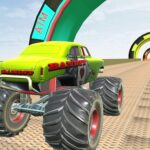
Driving vs Vehicle Games: Mechanics, Difficulty Curves, and Audience Fit
The video game industry has long drawn a sharp line between driving simulations and vehicle combat titles. While both involve controlling a machine with wheels, their core mechanics diverge radically, creating entirely different difficulty curves and player experiences.
Core Mechanics: Precision vs Chaos
Driving games focus on adherence to the laws of physics and traffic regulations. The primary skill is precision steering and spatial awareness required to navigate complex road layouts without violating rules. In contrast, vehicle games center around kinetic combat. These titles emphasize collision management and tactical aggression rather than rule-following.
- Driving Games: Require steady hands to maintain lane discipline while managing speed to handle turns safely.
- Vehicle Games: Demand rapid throttle control to build momentum for ramming maneuvers and precise drifting to evade enemy fire or obstacles.
This distinction creates a natural divide in how players approach failure. In driving titles, failing usually means crashing into traffic or going out of bounds, often resulting in a game over immediately upon impact with solid objects. Vehicle games, however, allow for more forgiving failure states where minor collisions might just alter the player's trajectory rather than ending the run.
The Difficulty Curve
Driving titles typically feature an exponential difficulty curve based on vehicle mass and speed. As players upgrade their cars to handle higher speeds or heavier weights, they must also contend with increasingly sophisticated traffic patterns. The challenge scales linearly with real-world driving standards; better vehicles offer smoother handling but require even more precise inputs.
Vehicle games follow a different trajectory entirely. They often start simple for new players and introduce complex mechanics such as ramming obstacles or managing collision damage later on. This means the difficulty curve is non-linear, ramping up significantly only after mastering basic movement controls. The learning curve here focuses more on understanding game-specific physics interactions rather than raw driving skill.
This difference in scaling has profound implications for player progression. Driving games reward consistency over long sessions, while vehicle games reward risk management and aggressive playstyles that only make sense once the underlying mechanics are mastered.
Car Stunt Master 3D Strategy Guide · How to Play Wolfoo Supermarket Sort · Math Squares Strategy Guide · American City Truck Transporting Game Guide · Game Recommendation · Advanced Guide · Walkthrough Tips · Popular H5 Game · Game Recommendation · High Score Tips · Popular H5 Game · Stuck? Check this out · Stuck? Check this out · Stuck? Check this out · Try Another Game
Specific Game Analysis
| Game Title | Primary Mechanic Focus | Danger Profile |
|---|---|---|
| Neck Stack Rush | Collecting neck pieces and stacking height to clear obstacles | Falls from extreme heights or collisions with walls while tall |
| Ants io | Arena combat, hunting enemies, using special abilities | Being outpaced by stronger units in fast-paced jungle battles |
| Driving Simulations | Road navigation and rule adherence | Crashing into traffic or going off-road due to poor steering |
Note: The examples above illustrate the contrast between casual arcade mechanics (like those found in stacking or arena shooters) versus traditional driving simulations. While Neck Stack Rush and Ants io represent other genres entirely, they share with vehicle games a common emphasis on momentum management rather than strict rule-following.
Which Suits Which Player?
Precision-driven players who enjoy the satisfaction of mastering complex controls and adhering to game rules will find driving simulations more rewarding. These titles offer a clear reward system based on flawless execution.
Risk-tolerant players who thrive in chaotic environments will prefer vehicle games or arcade-style challenges where momentum and collision management take center stage. The failure states here feel less punishing, allowing for experimentation with aggressive tactics.
Recommendation
If you seek a challenging experience that rewards meticulous control and rule-based navigation, prioritize driving simulations. They offer depth through progressive difficulty scaling based on vehicle mass and real-world physics.
Try These Games
Desert Rover Survival | Long Trailer Truck Transport Sim | Cargo Truck simulator 2025 | American City Truck Transporting
If you prefer fast-paced action where momentum is key and failure states are forgiving, look toward vehicle games or arcade titles like the ones described above. These genres shine when players enjoy testing limits in dynamic, chaotic environments.
Quick Reference
- Games in Driving suffer from shallow tutorial design
- Most Driving advice repeats marketing copy
- Community wikis outperform official guides for Driving
- Engine constraints drive Driving mechanic dominance
At a Glance
| Factor | What Most Guides Say | What Actually Matters |
|---|---|---|
| Beginner | Start slow, build up | Dive into failure for rapid learning |
| Advanced | Follow pro strategies | Reverse-engineer failure modes |
| Learning | Linear progression | Alternating challenge/rest cycles |