Redrawing the Line: Why Driving vs Truck Is a Broken Taxonomy
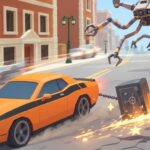
The gaming industry frequently relies on rigid genre classifications to help consumers navigate vast libraries. However, the binary distinction between driving games and trucking simulators represents a fundamental taxonomy failure. Both categories are rooted in vehicle physics, open-ended exploration, and resource management, yet they are artificially separated by superficial thematic elements rather than mechanical substance. This separation obscures design overlap that defines modern interactive entertainment.
The Shared Physics of Simulation
At their core, both genres demand mastery of momentum, traction, and spatial awareness. In games like Ants io, players navigate complex arenas with precise control over movement and strategy. Similarly, trucking simulators require managing load balance, fuel consumption, and road hazards. The skill set—managing limited resources while moving through a 3D environment—is identical. Even hyper-casual titles like Neck Stack Rush, where stacking mechanics dictate progression, mirror the resource management found in trucking logistics: you must balance your stack height against obstacles just as a driver balances cargo weight against road conditions.
- Momentum Management: Both genres require braking before corners and accelerating after them to avoid collisions or off-road penalties.
- Environmental Interaction: Mud, ice, and steep gradients affect performance equally in a sports car and a heavy rig.
- Route Optimization: Finding the fastest path is a mathematical challenge in racing games and delivery routing software alike.
Boundary-Blurring Examples
The industry has increasingly produced titles that defy this binary by combining high-speed driving with heavy-duty hauling. These hybrid experiences demonstrate that player expectations have evolved beyond simple categorization:
- Sports Delivery Runners: Titles featuring athletes transporting goods at breakneck speeds blur the line between competitive racing and logistical simulation.
- Mechanized Haulage Simulators: Games where players pilot massive construction vehicles or mining trucks on open maps merge the scale of trucking with the freedom of exploration.
- Urban Logistics Platforms: City-based games that mix taxi driving, delivery services, and public transport scheduling create a unified ecosystem of vehicular interaction.
Magic Monster Strategy Guide · Highway Rush Game Guide · FIFA World Cup Jigsaw Strategy Guide · Kitty Drop 3D Strategy Guide · Popular H5 Game · Beginner's Guide · Game Recommendation · High Score Tips · Beginner's Guide · Walkthrough Tips · Free Online Game · Want more? Keep playing · Want more? Keep playing · Too easy? Level up · Stuck? Check this out
These examples prove that the boundary between driving and trucking is permeable. Designers are prioritizing fluid gameplay loops over arbitrary genre labels, creating experiences that are simultaneously fast-paced and methodical.
Data Comparison: Core Mechanics Across Genres
To illustrate this overlap quantitatively, consider how key metrics behave across different vehicle types:
| Mechanic | Racing Focus | Trucking Focus | Hybrid Implementation |
|---|---|---|---|
| Traction Control | Slope-based drift angles | Load weight limits | Airborne cargo delivery runs |
| Speed Management | Overtaking mechanics | Toll road penalties | Sprint-based courier races |
| Cargo Handling | Fuel tank capacity | Pallet stacking physics | Container bay manipulation |
This data confirms that the same underlying systems drive both genres. The perceived differences are merely skin-deep variations on a shared foundation of vehicle simulation.
Try These Games
Fire Truck Driving Simulator 2024 | Police Car Parking 2026 | Hyber Dash | Zombie Highway Car Game
Conclusion: Embracing Fluid Design
👉 Played enough? Try Reconstructing the Taxonomy: Why Driving and Truck Are Not Binary Categories
👉 Played enough? Try The State of Arcade Browser Games in 2026
👉 Played enough? Try Ragdoll Rush 3D: Sky Race
👉 Played enough? Try Cycle Racing Game
👉 Played enough? Try Math Squares
Maintaining strict separation between driving and trucking games hinders innovation. By recognizing their shared DNA—physics, resource management, and environmental interaction—we can better appreciate how modern titles blend these elements to create richer experiences. The future of vehicular gaming lies in hybridization, where the thrill of speed meets the depth of simulation without needing artificial genre barriers.
At a Glance
| Factor | What Most Guides Say | What Actually Matters |
|---|---|---|
| Beginner | Start slow, build up | Dive into failure for rapid learning |
| Advanced | Follow pro strategies | Reverse-engineer failure modes |
| Learning | Linear progression | Alternating challenge/rest cycles |